
Baltic Event Works in Progress
Maria's Silence
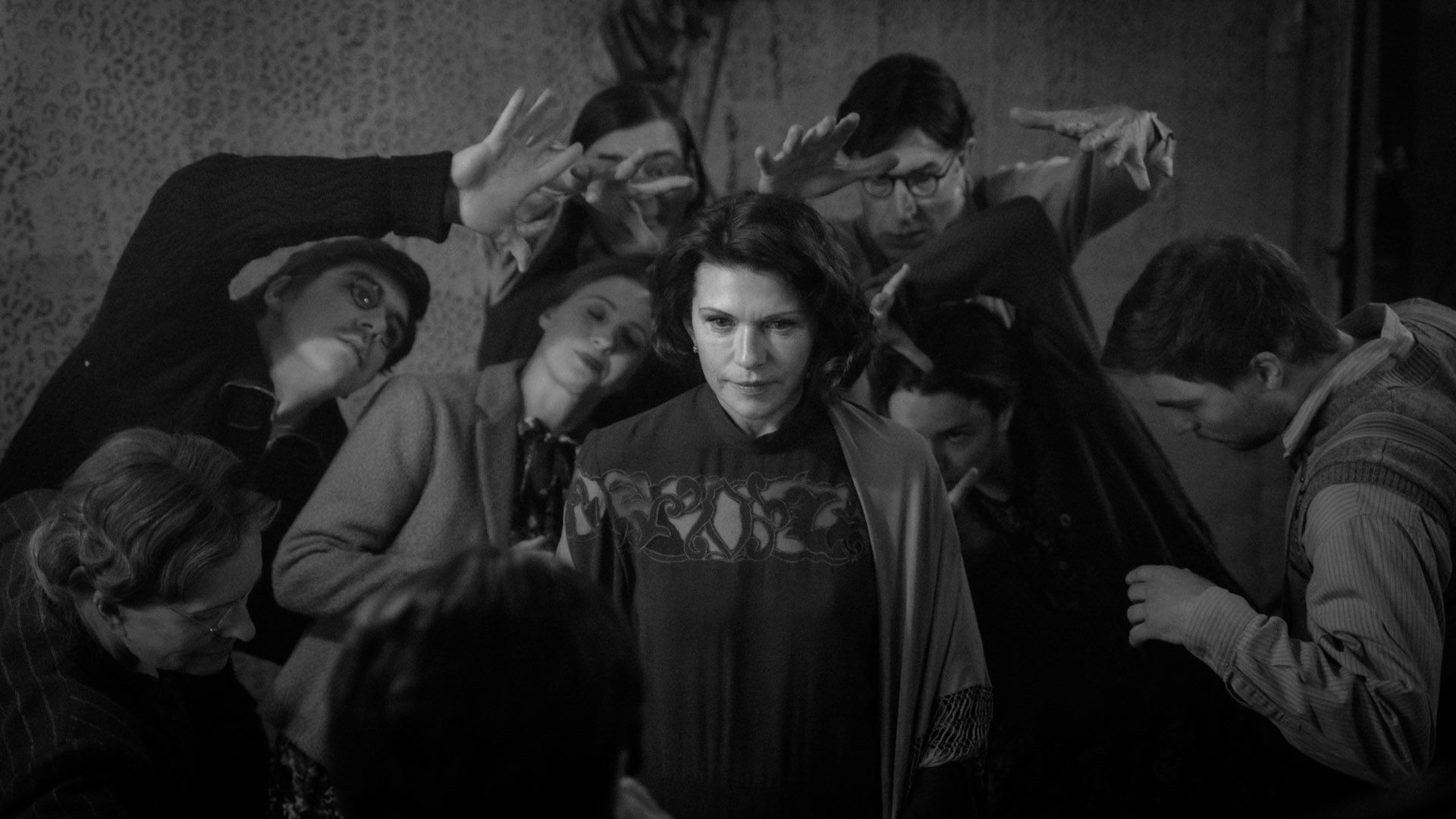
A powerful historical drama based on the true story of Maria Leiko, famous actress who late in her career has to decide between fame and love for her grandchild, between her ideals or the lies of Stalin’s totalitarian regime.
A powerful historical drama based on the true story of Maria Leiko, famous actress who late in her career has to decide between fame and love for her grandchild, between her ideals or the lies of Stalin’s totalitarian regime.
It is 1935. The former silent cinema and theater star in Germany Marija Leiko goes to the Soviet Union to take care of her granddaughter. The way back to Latvia leads through Moscow where her former friends talk her into staying in Moscow for one season to perform with the Latvian theater “Skatuve”. Leiko is ready to once again experience the working atmosphere of the theatre, yet soon enough she becomes aware of the violent character or the regime under its “new life” façade. A year later, as the NKVD-organized “national operation” begins, her friend Zakovskis is put in charge of it. Should the famous actress admit to anti-Soviet activities, it would be proof positive to Latvian disloyalty to the regime. Albeit in the dark about the fate of her granddaughter, who has been kidnapped by the NKVD, Leiko cannot admit to “crimes” she has not committed. She is forced to play her life’s most tragic role – an innocent victim destroyed along thousands of other Latvians in soviet Russia.
Director's note:
Characters Marija Leiko played, as well as her style and expression in acting, were not only a reflection of her political views and avant-garde sensibilities but, in a sense, led to the tragic result of her life. She had experienced the most progressive period of the 20th century, playing in Friedrich Wilhelm’s film Satan (1919) or on stage at Erwin Piscator’s German political theatre. She dreamed of an ideal society where everyone’s rights would be honoured and the majority of people were not condemned to a miserable existence. Her attempts to take a stance against the brutality of the totalitarianism of the interwar period led her to her death. Leiko was an individual who ended up taking a position against the powers that be and, as historically tends to be the case, lost. Marija Leiko’s story is outstanding material both to reveal the scale of cruelty with which people interacted under a demonic political regime, and the biography of a strong person and outstanding actress.
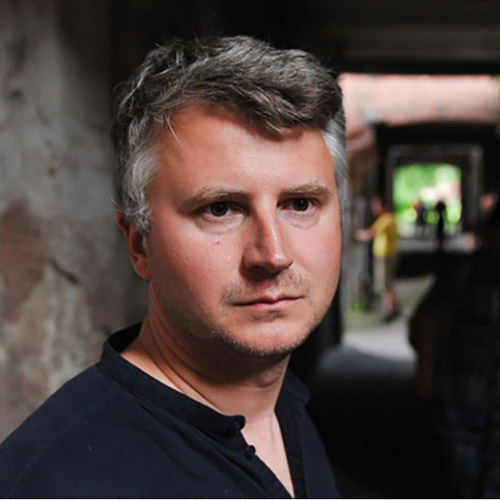
Dāvis Sīmanis, PhD Arts, is a Latvian filmmaker and theorist. He has written and directed historical feature films, poetic documentary films and cross-genre features. His docu-fiction Escaping Riga (2014) is a story of two geniuses - philosopher Sir Isaiah Berlin and film director Sergei Eisenstein, premiered internationally at IDFA 2014 and is still screened at documentary film festivals worldwide. Feature fiction film The Mover (2018) - the true story of the “Latvian Schindler” Žanis Lipke, was Latvia’s official candidate for best foreign-language film for the 2020 Oscars and premiered internationally at Moscow IFF, received National Film awards: Best Director; Best Production design; Best Cinematography; Best Supporting Actress.
[object Object]

Gints Grūbe worked extensively in the media industry before establishing Mistrus Media in 2000. With nearly 20 years of experience as a scriptwriter, producer and director, he has been involved in more than 15 films. His productions include “To Be Continued” by the legendary filmmaker Ivars Seleckis (2018, international premiere at Visions du Réel) and the historical drama “The Mover” (dir. Dāvis Sīmanis, international premiere at Moscow IFF). Both were selected as Latvia's official entries for the Best International Feature Film category at the Oscars. Gints co-produced two acclaimed minority co-productions: “In the Dusk” by Šarūnas Bartas (Lithuania, France, Czech Republic, Serbia, Latvia, Portugal), Official Selection at the 2020 Cannes Film Festival, and “Natural Light” by Dénes Nagy (Hungary, France, Latvia, Germany), which received the Silver Bear for Best Director at Berlinale 2020. Recent releases include the feature “January” by Viesturs Kairišs (Tribeca Film Festival 2022) and “Maria’s Silence” by Dāvis Sīmanis (Berlinale 2024). He also produced the limited series “Pansion in the Mansion” (2024), released nationally in cinemas and on VOD, and the mini-series “Queen of the Press” (2021).
[object Object]