
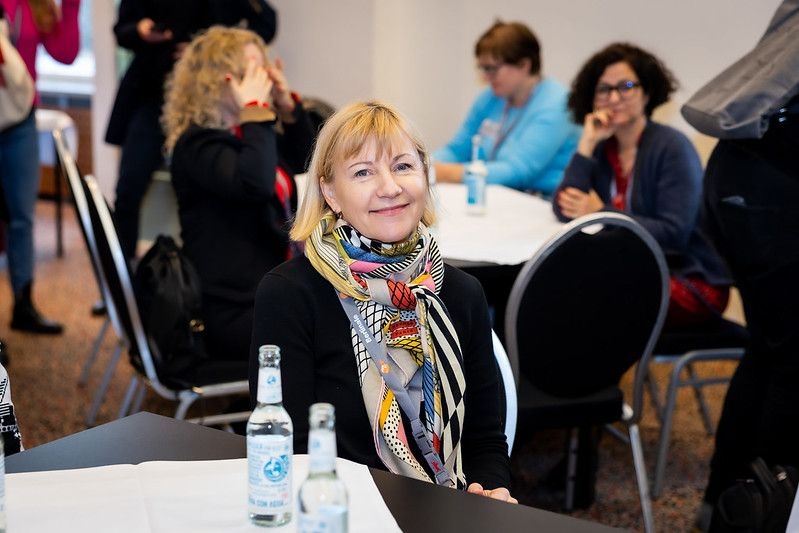
What began in 2002 as an ambitious effort to bring Baltic cinema to international attention has grown into one of the region’s most significant platforms for the film industry. As Baltic Event celebrates its 25th edition, founder Riina Sildos reflects on the early days, the evolving landscape of European cinema, and the importance of bringing people together.
In the early 2000s, the Baltic film industry was in a very different state. The three countries were still rebuilding their film sectors after regaining independence. Production resources were insufficient, and international visibility was limited. In Estonia, there were even periods when no new domestic feature film was released in cinemas.
“The financing system was fragmented, and there was very little money available,” recalls Riina, who was leading the Estonian Film Foundation at the time. Drawing on Scandinavian funding models, the Foundation was working to establish a more structured system, thereby bringing greater stability and clearer responsibilities for decision-makers and producers.
But financing was only part of the challenge. There were compelling scripts, emerging talent and a growing determination to make films. What was missing was access to international partners, festivals, sales agents and distributors.
Riina found inspiration at CinéMart in Rotterdam, one of the world’s oldest co-production markets. She recognised the potential to bring international film professionals directly to Tallinn to discover a region still largely unfamiliar to the global film industry.
At the time, the Baltic countries were considered exotic. Very few people knew anything about our cinema,” she recalls.
- Riina Sildos, founder of Baltic Event
A handful of filmmakers, including Peeter Simm, Šarūnas Bartas and Laila Pakalniņa, had gained international recognition, yet the region had much more to offer.
The first Baltic Event took place in 2002, attracting approximately 25 international guests to Tallinn. Rather than focusing on projects in development, the initial concept was to showcase completed films to festival programmers, sales agents and distributors, helping them reach audiences beyond their home countries. It was a modest yet pioneering start. Regional film markets were still relatively rare in Europe, and Baltic Event was among the early initiatives to recognise their potential.
What made the first editions special was the personal approach. With a small number of guests, the organisers could devote extraordinary attention to each participant. “We were available almost 24 hours a day. We wanted everyone who came to Tallinn to make the most of their time here,” Riina remembers.
The working day did not end when the official programme finished. Evenings were an essential part of the market, with carefully arranged dinners that brought together people whose professional interests might intersect. The organisers studied the preferences of producers, distributors and sales agents, then devised seating plans to foster meaningful conversations and potential collaborations.
“It was quite a puzzle, but it worked remarkably well. We tried to ensure that business and pleasure went hand in hand.”
- Riina Sildos, founder of Baltic Event
There was also room for more unconventional networking. Bowling competitions, with guests divided into teams, became a memorable feature of the early editions. Excursions to unusual Tallinn locations, including the historic Dominican Monastery, introduced visitors to the city and highlighted its potential as a filming destination.
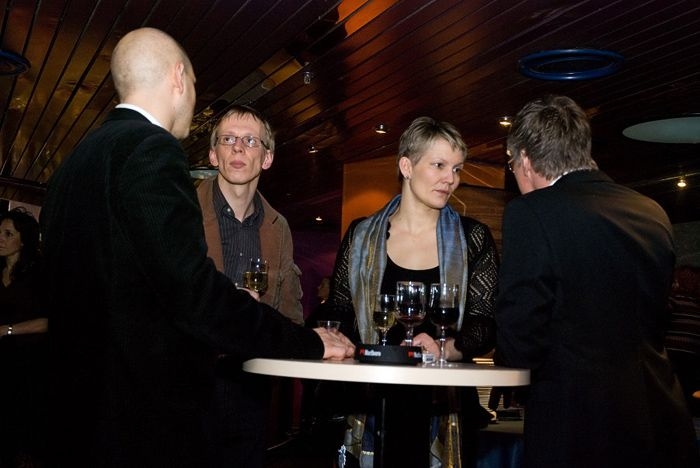
Riina believes this personal attention remained one of Baltic Event’s defining characteristics for almost a decade. Inevitably, growth brought change. As attendance grew, the carefully orchestrated dinners became increasingly difficult to manage. Today, with nearly nine hundred professionals from more than 50 countries attending Industry@Tallinn & Baltic Event (ITBE), such an individual approach would be practically impossible.
Yet the underlying philosophy has endured: the value of a film market lies not merely in attendance, but in the connections people make.
Over the following two decades, Baltic Event evolved alongside the international film industry. What began as a showcase for completed Baltic films gradually expanded into a platform for developing projects, securing co-production partners, and exchanging professional knowledge.
Riina views this transformation as part of a broader shift across European film markets. Traditional markets, originally designed to facilitate sales and distribution, have increasingly become centres for professional development, training and industry discussion. “Today, a film market is much more than a place to present projects.
It is also a place where people learn, exchange information and discover new ways of working.”
ITBE now brings together film and series co-production, works-in-progress presentations, specialised initiatives, training programmes, and panels and discussions. Its activities extend beyond the Baltic countries, attracting international projects and professionals. Cooperation with established European training organisations, including EAVE, has also contributed to its development.
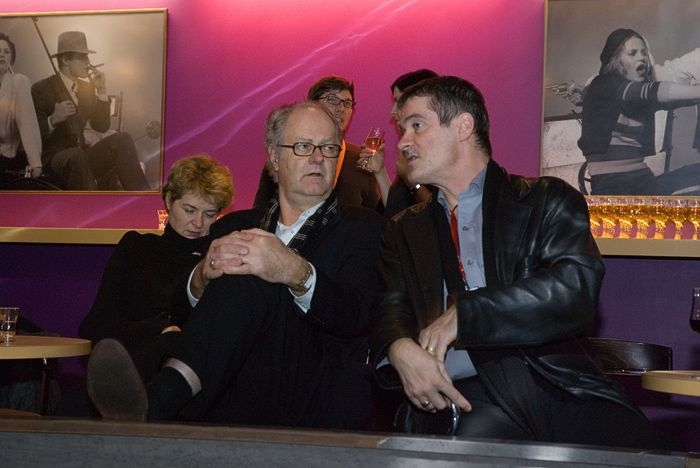
“It is an enormous melting pot of ideas and energy,” Riina says, describing the intensity of today’s industry programme. Creative Europe MEDIA funding has played a crucial role in this development, supporting the event for more than two decades. The EURIMAGES Co-Production Development Award for film projects and the EURIMAGES Series Co-Development Award have further strengthened the market, attracting higher-quality project submissions.
With film markets now taking place across Europe and beyond, what makes a more regional event such as ITBE relevant?
Riina distinguishes between major global markets, which attract projects and professionals from around the world, and regional platforms that offer more focused opportunities. In a large international market, the range of potential partners may be broader. However, for producers who already know which territories or collaborators they are seeking, a regional market can be more effective. “People come with a specific interest in the region. It is easier to reach the right people, make contacts and build relationships.” These encounters offer something that cannot be obtained from funding guidelines or online databases: a first-hand understanding of how film industries operate, how decisions are made, and how potential partners work.
This is particularly significant for the Baltic countries. With relatively small domestic audiences and limited national funding, international collaboration is essential for producing more ambitious films. “If we want to be internationally competitive, we cannot rely solely on our domestic resources. We have to co-produce,” Riina emphasises.
She believes Baltic Event has helped establish a recognisable international identity for Baltic cinema and has substantially contributed to the region’s film industries. A dedicated meeting place where filmmakers can exchange ideas, secure financing and build partnerships has enabled producers to pursue projects with greater artistic ambition and higher production values. Baltic cinema is no longer an unfamiliar curiosity but an established and increasingly confident presence in international filmmaking.
Looking back, Riina remembers the early years with particular fondness. The small gatherings, carefully planned dinners and playful networking activities fostered a sense of community that is difficult to reproduce on a much larger scale.
But nostalgia doesn’t stop her from appreciating how Baltic Event has evolved. She is particularly pleased with its adaptability. Both the co-production market and Works in Progress have expanded beyond Baltic productions to include international projects, while new industry initiatives and specialised programmes continue to respond to changing needs.
“What I particularly like is the ability to adapt quickly. The platform is well established, but it is also constantly evolving.”
- Riina Sildos, founder of Baltic Event
And there is another constant in Baltic Event’s history: girl power. From the very beginning, the event has been led by women, and women have also made up the majority of its organising team. Their dedication, enthusiasm and collaborative spirit have helped transform a small gathering into the international industry platform it is today.
After 25 editions, Baltic Event has travelled a remarkable distance from the small gathering that first welcomed international guests to a largely undiscovered film region. Its original mission, however, remains relevant: connecting filmmakers with the people, knowledge and opportunities needed to bring their stories to the world.
The article was written by Eda Kopel and published at Baltic Film Magazine 3/2026. READ THE MAGAZINE HERE