

Paraiso, Outer Space
A walk in the Bardo illuminated by city lights,
a sea of connections that look like people.
The story follows Anton, who is celebrating his bachelor's party when he learns that his best friend has passed away. Anton tries to return to the party but it is impossible. He is devastated, angry, sad and confused... so, after confronting the ghost of his friend, he starts walking.
He walks through the city and meets other people, other stories that are passing through this world. Anton is faced with his grief and fears about the future. As he walks deeper into the city, he is forced to look at his own choices and face his sorrows.
This film is a moment of encounter, a celebration of serendipity, a walk through change and grief, marked by the poetic spirit of cinema in a city after hours.
Producers' note
Carlos’s films talk about life. They tear the soul open but in a way that doesn’t hurt, it soothes. He has experimented with topics of self and family through short films, experimental films, documentaries. As a filmmaker (and a person), he is playful and experimental in the best kind of way, bringing you closer to often difficult topics but not letting you get lost in them. He makes you think about death while letting you know that life is for the living.
With this film, Carlos wanted to expand his mind and filmmaking style by taking an experimental approach and finding likeminded friends in the cast and crew to go on an improvisational journey through the city at night with him. I wanted to take part in this project because it is free from constraints and I find that inspiring. Carlos had a story that feels like a poem (and is based on one - “Uno” by Mariano Blatt) and the idea that in the best or worst of times, night brings solace, peace, understanding. And he built that into a feature film that deals with life, death, the future and the past.
We shot for 11 shooting days between August 17 and 30th in different locations around Tallinn. Our cast is headlined by Rea Lest-Liik, Jarmo Reha, Markus Truup, Alo Kõrve, Seren Orozvary, Katariina Tamm and others who joined us for the ride. The creative crew also includes DOP Diego Barajas, sound recordist and sound designer Vincent Roy and editor Patrick Antonjuk.
We are in the post-production phase in the autumn and spring of next year and plan to have a finished film ready by next summer. We are looking for a strong festival premiere to support our distribution at home. But even better would be a sales/distribution partner who wants to join the journey – someone to work with us on the final cut. Someone who wants to be inspired by a lack of constraints and sense of freedom that give space for the miracles, mistakes, and small victories that will form the film that this will be.
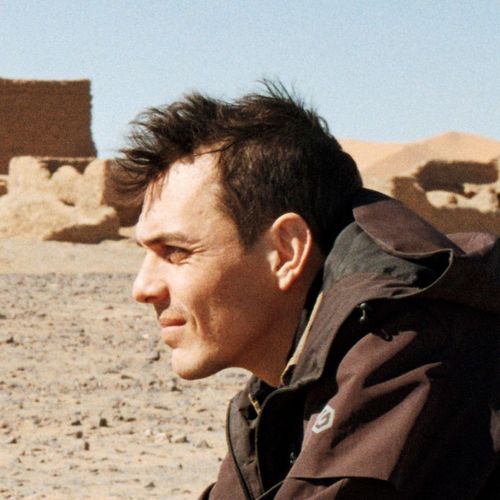
Director's note
This film was born of an impulse, like a lightning strike. The idea of a man wandering the city and meeting other worlds was in the back of my head for some time and about a year ago, a good friend passed away. The story grew into a person walking through grief and meeting his ghosts. From the past and the present. The process of understanding and accepting what was lost and what remains.
I describe the film as: ‘A walk through the Bardo, meeting a sea of connections shaped as people.’ The bardo is a liminal space in Buddhist philosophy, a moment of transition. This is the framework for Anton’s walk. He must face his grief of the past, fears for the future, and his own relationship with the present.
The presence of ghosts is spread through the film. They are entities without time, that interact with the present, the past and a potential future. The presence of Carlos as a ghost, is what allows Anton to have a dialogue with the past, while Sonja’s presence highlights that Anton does not exist in a vacuum, and his process is tied together with those in which he exists in relationships.
The language of the film is a balance between naturalistic and metaphorical. It is what Alejo Carpentier called ‘Lo real maravilloso’ (the wonderful real), which is to get inspiration from reality and its wonderful coincidences. Think of it as seeing the same person three times on the same night or a beautiful voice singing through the night as if nobody could hear.
We are openly inviting the audience to embrace these meanings and metaphors, the type of metaphors that exist in cinema. Such as ghosts and serendipity. I propose an awareness of the device in film, a device that is there to invite the audience to share the point of view of Anton, to understand his journey and bring it into their own experiences. This is accomplished by a minimalistic aesthetic that embraces the city and lets the cast become presences in the night and part of Anton's walk through the Bardo.
Biography
Carlos E. Lesmes (1987) is a Colombian film director currently living and working in Estonia. Since graduating from the MA in Baltic Film and Arts School in 2014, Carlos has been an active member of the Estonian film community. Currently Carlos is pursuing a PHD degree at TLU and developing his first fiction feature film. Carlos is interested in people, comic books and particle physics, but mostly in how to tie it all to try and tell stories about the experience of being a human.
Profile
Tin Can is an independent film production company focused on author’s projects. We look for projects that want to experiment with form and narrative but are full of heart. We are passionate about creating worlds in playful ways, where artistic exploration leads to everything. We are a young company focused on creation and experimentation, aiming to make the best films and art pieces we can, always putting creative vision first.
We are engaged in different creative outputs focused on film, visual art and sharing them with the public. We are currently starting the Distribution of the feature documentary “Beautiful Stupid Thing”, in financing with a short documentary “We Don’t Talk About It” and distributing the experimental short “Play/Repeat”.