

In the Truth
Are you in the truth?
Seventeen-year-old Mark lives in a loving yet strict Jehovah’s Witness family, determined to become the best preacher he can. But when he begins a secret romance with his classmate Elina, she is drawn into his faith. As Elina embraces the religion, their relationship unravels, and she exposes Mark’s double life, leading to his excommunication. Mark’s fate now rests with his father, Sergey, who must choose between his son and his faith by shunning him. His decision sets in motion a chain of events culminating in a tragic confrontation over one question: what does it truly mean to be “in the truth”?
Producers' note
Throughout history, religion has been inseparable from humanity—capable of uniting and dividing, offering salvation and causing destruction, inspiring conviction while provoking doubt. In today's increasingly polarized world, we are constantly asked to take sides: politically, socially, spiritually.
In the Truth turns its attention to people who are often overlooked or misunderstood – individuals we pass with polite indifference, assuming we already know who they are. The film offers an intimate portrait of a closed religious community, inviting audiences to step beyond stereotypes and experience a perspective rarely seen from within. Rather than judging or defending, it encourages viewers to recognize the humanity of those living outside the mainstream. They are part of our society too, and their stories deserve to be heard.
At its core, the film is about belonging: the universal search for safety, certainty, and purpose. It is also a coming-of-age story in which adolescence collides with uncompromising religious conviction. Faith shapes daily life, rejecting birthdays, Christmas celebrations, and even standing for the national anthem. The protagonist faces moments of doubt, loyalty, love, and self-discovery, creating a conflict between personal identity and collective belief.
Rooted in director Toms Harjo's experience growing up as one of Jehovah's Witnesses, the film offers rare authenticity. The feature expands this exploration, balancing certainty and uncertainty, faith and freedom, isolation and belonging. We're taking bold steps in casting and storytelling to bring the The project has already received both development and production support from Latvia's national funding bodies and has attracted early interest from national VOD platforms. We're planning to collaborate with co-producers in France and Poland, as well as project has gained interest from New Europe Film Sales, creating a strong foundation for the film’s next stages.
Screenwriters' note
I truly believe that a deeply personal story of experience is a powerful starting point on the path to cinematic excellence. Our journey together with Toms also began right there. But the next question, of course, is: Is the filmmaker capable of looking back on the events that have affected him with self-critical clarity and seeing both sides of them? Working with Toms on the story for the film “In The Truth”, I’ve come to realize that he possesses this ability. What draws me in the most is the word “truth” itself and its meaning in the context of this film. It’s obvious that there is no single absolute truth - it changes depending on the observer, on who is recording it, and on the purpose for which it is being done. However, an event that occurred while this story was taking shape made me clearly realize that this film had to be made. I’ve long wondered how a person who wholeheartedly believes in a religious community perceives the truth. Once, while riding a bus from Riga to Liepaja, I happened to notice six young people - all wearing white, freshly ironed T-shirts with name tags on their chests. They were missionaries of the Church of Jesus Christ, followers of an organization reminiscent of the Jehovah’s Witnesses. From the outside, they looked just like ordinary young people - lively, busy with plans, conversations, and activities. Yet something about it all seemed strange. Then I realized - there was a special sparkle in their eyes. The same bright sparkle in all of them. That was their truth. From that moment on, I’ve noticed that look in everyone I’ve met who comes from similar communities. This sparkle both captivates and frightens me. It is the sparkle that arises when a person believes they have found the one and only truth. And that is exactly what - drawing on all our experience in screenwriting - we brought to life in the creation of this screenplay.

Director's note
This film is, first and foremost, a tribute to my family — people who, despite belonging to a religious organization, never lost the ability to love beyond its boundaries. When a son’s doubts separate him from the community that shaped his life, leading to his expulsion, they face a painful conflict between faith, family, and love.
I do not want to portray the world as a battle between good and evil. The viewer should sometimes understand why someone would want to belong to such a place: the warmth, certainty, and sense of belonging it provides. Every character is treated with compassion. They are ordinary people who love, argue, misunderstand each other, make mistakes, and search for meaning.
This film is not anti-religious propaganda. Its focus is not doctrine, but human relationships. Mark’s awakening happens through emotional experience rather than arguments. The goal is to explore what happens when someone begins questioning the reality they have always known.
The story is told from Mark’s subjective perspective. His emotions and hopes shape the world around him. The central conflict is between love and the systems people create to protect their beliefs.
At the heart of the film is a painful contradiction: a father who loves his son so deeply that he is willing to lose him in order to save him. A love that becomes terrifying when guided by absolute certainty. Yet the film leaves room for hope — the possibility that human connection can survive even after ideology has divided people.
The visual language is built around touch: a hand on a shoulder, a gesture of guidance, an act of comfort. These moments represent faith and belonging, while the absence of touch represents isolation and awakening.
Ultimately, this is a film about belief, family, and the fragile space between love and control. It asks whether love can survive when people no longer share the same truth.

Biography
Stanislavs Tokalovs has acquired a Directors degree in Raindance Film School, London. His short film A Little Longer (2015) won the National Best Short Film award in 2015 and has been to various film festivals around the world. His first feature What Nobody Can See (2017) premiered at Moscow Film Festival and has been to over 15 film festivals around the world. Now he is finishing his second feature film Lovable and getting his Master’s degree in film in Latvian Academy of Culture in Riga.
Filmography
Filmography
Mikhail Tal. From a Far (2015, doc), Tas, ko vini neredz (What Nobody Can See, 2017), Milulis (Lovable, 2022)

Biography
Līva Vernere is a film producer based in Riga, Latvia. After graduating bachelors in Film production she is doing her masters in Curatorial Studies at the Latvian Academy of Art. Has worked with film studios "Tritone Studio", "Air Productions" and "fon Films" as a producer of documentary and fiction short films screened locally and internationally. Līva joined the VFS FILMS team as a producer in 2024.
Biography
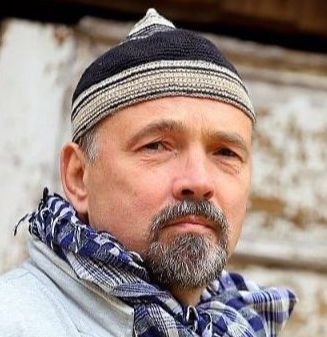
Uldis Cekulis created the independent production company VFS FILMS 25 years ago
and has worked on almost 50 creative documentaries both as a producer and sometimes as a cameraman. His co-produced films have received prestigious awards, like the Shanghai IFF Golden Goblet for “Bridges of Time” the Karlovy Vary IFF Crystal Globe for “Immortal” and the Best Documentary award at the 36th Warsaw FF for “The Jump”. His Latvian-Italian co- production “The Rossellinis” premiered at the 77th Venice IFF.