
1970
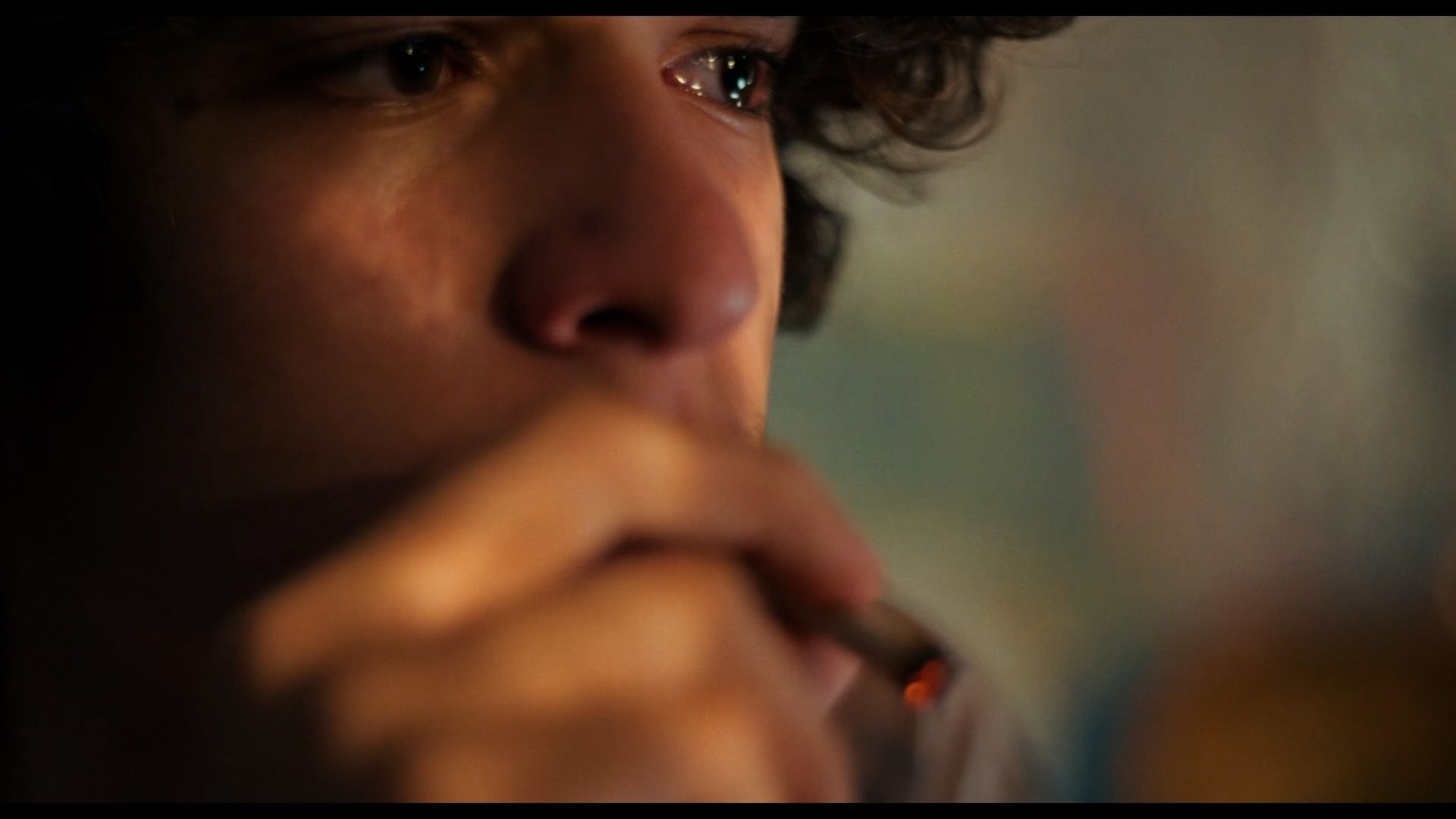
Abandoned by his parents, Draško (13) escapes with a hippie girl (16), seeking a place to belong.
Summer 1970. Draško (13) arrives at his grandparents' home in the countryside for what he believes is a short holiday. There, he meets Eržika (16), a rebellious local girl who introduces him to the hippie movement. When he learns that his parents are divorcing and have left him behind, he runs away with Eržika. Swept into a world of anti-Vietnam War protests, rock concerts, drugs and wild parties, his desperate journey home turns into a search for a new family and his first encounter with heartbreak, loss and freedom.
Producers' note
1970 has been a personal project for us from the beginning. Rooted in writer-director Darko Lungulov's own memories, the film takes us to a summer in Vojvodina at the beginning of the 1970s, when music, political idealism, new freedoms and changing social values were opening up a new world for young people.
Developed as an international co-production between Serbia, Hungary, Luxembourg and Croatia, the film reflects the multicultural spirit at its core.
At the centre of 1970 is the passage from childhood into adulthood. Through Draško's first encounters with love, desire, rebellion, disappointment and political awareness, the film captures the moment when the world suddenly becomes bigger and more complicated. Its historical setting gives the film a distinctive atmosphere, while its emotions remain contemporary.
At the work-in-progress stage, we are especially excited by the balance between an intimate coming-of-age story and a wider portrait of a generation. Its warmth, humour, music and sense of freedom distinguish it from the darker tone often associated with cinema from our region, while themes of personal freedom, tolerance, women's emancipation and political awakening feel increasingly relevant today.
We see the film positioned between international arthouse cinema and festivals dedicated to younger audiences. Draško's point of view and emotional awakening give the film the potential to connect with young viewers, while its cinematic language and historical context place it firmly within the broader arthouse landscape.
Its accessibility and emotional directness can help it travel widely and connect with audiences beyond its immediate cultural context. We are looking for the right international sales partner to help us build a strong festival launch and a long audience life beyond it.
For us, 1970 is not a film about nostalgia but about the intensity of being young and believing that both your own life and the world around you can still be changed.

Director's note
A return to my childhood village triggered a memory. In 1970, I tried to evoke that memory by creating a film language that weaves archival material with fiction while immersing the viewer in my hero's point of view. While the adult world appears dishonest, Draško's universe is personal and sincere. Though set in the distant 1970, my story is about today – it speaks of young people and their search for a place in a hopeless world, where every discovery feels both a victory and a loss.
Screenwriter's note
The intimate is deeper than the autobiographical. 1970 is an intimate story.
The idea came when I accidentally found myself in the village where I spent summer holidays as a child. I was ambushed by what Proust calls an "involuntary autobiographical memory".
I returned home and wrote about every detail of my visit – every step, every scent, every tree. I tried to reconstruct where my grandparents' house once stood and where the crooked pear tree I hated once grew. I recalled some deeply buried images from that childhood summer home. One image shook me – my mother and I were sitting on a blanket in the grass, and my mother was crying.
The story takes place in the revolutionary, post-1968 era, when new ideas permeated the world. The countercultural revolution, student uprisings, the hippie movement, the sexual revolution and the fight for women's rights reached Yugoslavia. One result of these newfound freedoms was the emergence of divorce. The story unfolds at a time when having divorced parents set me apart.
Vojvodina, where the story takes place, was – and still is – an ethnically mixed, multilingual region of Serbia (then Yugoslavia). Serbs, Hungarians and other nationalities coexisted harmoniously there. I remember my grandmother, Vukica, a Serb, speaking Hungarian to our Hungarian neighbours, who would reply in Serbian.
I wanted to convey the atmosphere that shaped my upbringing in this rural yet cosmopolitan environment.
The story loosely draws on The Odyssey. When Draško discovers that his parents have left him with his grandparents indefinitely, he embarks on a journey. Like Odysseus, he tries to return home. Along the way, he encounters the obstacles and temptations of growing up.
I feel this story is not a period story; it is about today – young people searching for their voice in a hopeless world and refusing to be broken by bullying authorities. It feels like our last hope in today's scary times.
Biography
Darko Lungulov is a Serbian writer/director whose films and collaborations have screened and won awards at Tribeca, Sundance, and Karlovy Vary, among other festivals, and have aired on Netflix, Showtime, and Amazon Prime. His debut feature, Here and There, won the Best NY Narrative Award at Tribeca 2009 and received critical acclaim from The Hollywood Reporter, Variety, and The New York Times. Darko has directed both fiction and documentary films. 1970 is his third feature.

Biography
Snezana van Houwelingen is a Serbian producer and founder of This and That Productions. An alumna of EAVE, EAVE+ and ACE Producers, she was selected as Producer on the Move in 2015. Her films have premiered at Sundance, Toronto, Karlovy Vary, Berlinale and Venice. She is currently producing Folk Play and 1970. She is an Associate Professor at the Faculty of Media and Communications in Belgrade and a member of the European Film Academy and European Producers Club.